Hello world!
Welcome to WordPress. This is your first post. Edit or delete it, then start writing!
Welcome to WordPress. This is your first post. Edit or delete it, then start writing!
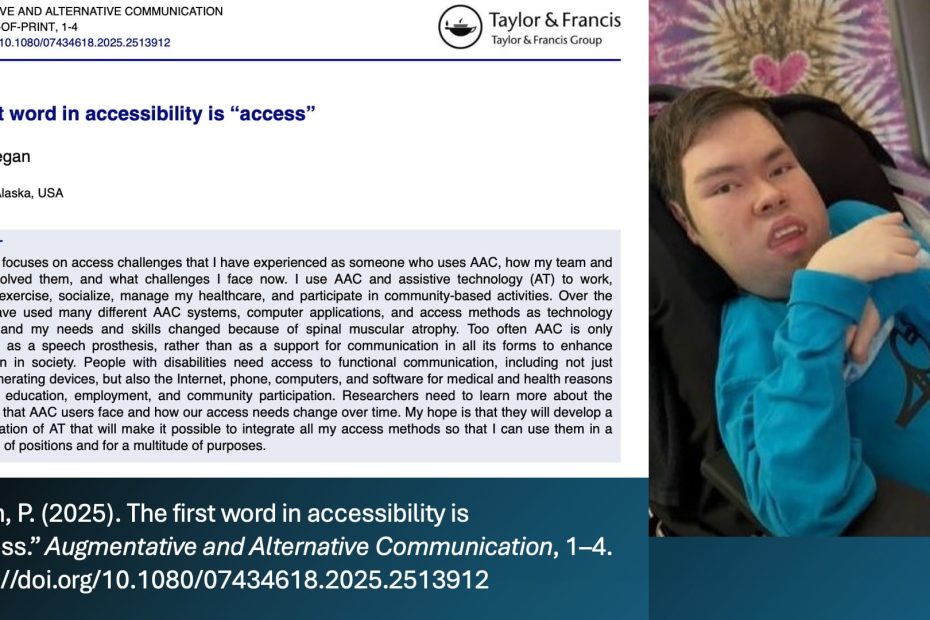
Patrick Regan (2025) is President-Elect of USSAAC, and he also plays leadership roles in ISAAC, and in outreach programs for the Bridge School. Patrick experiences Spinal Muscular Atrophy, and has used a wide variety of AAC to communicate. In this paper, he describes “access challenges that I have experienced as someone who uses AAC, how my team and I have resolved them, and what challenges I face now.”
Now free at the AAC journal
https://doi.org/10.1080/07434618.2025.2513912
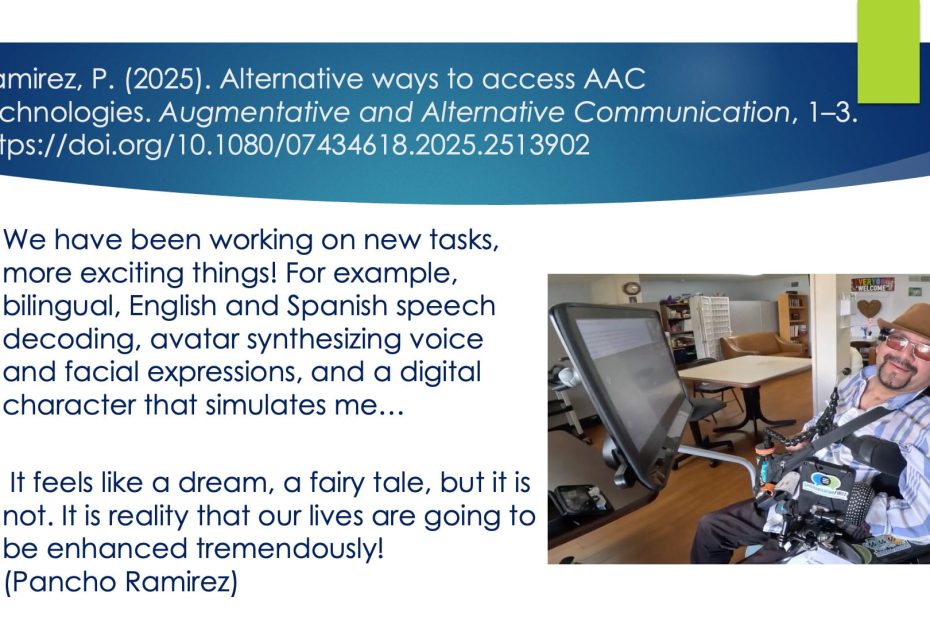
Pancho Ramirez (2025) describes his evolving use of AAC, including laser pointers, an air mouse, and his participation in clinical trials with a brain computer interface. He emphasizes the importance of supporting communication with family members (in multiple languages!), and his strategies for active community participation.
Now free at the AAC journal
https://doi.org/10.1080/07434618.2025.2513902
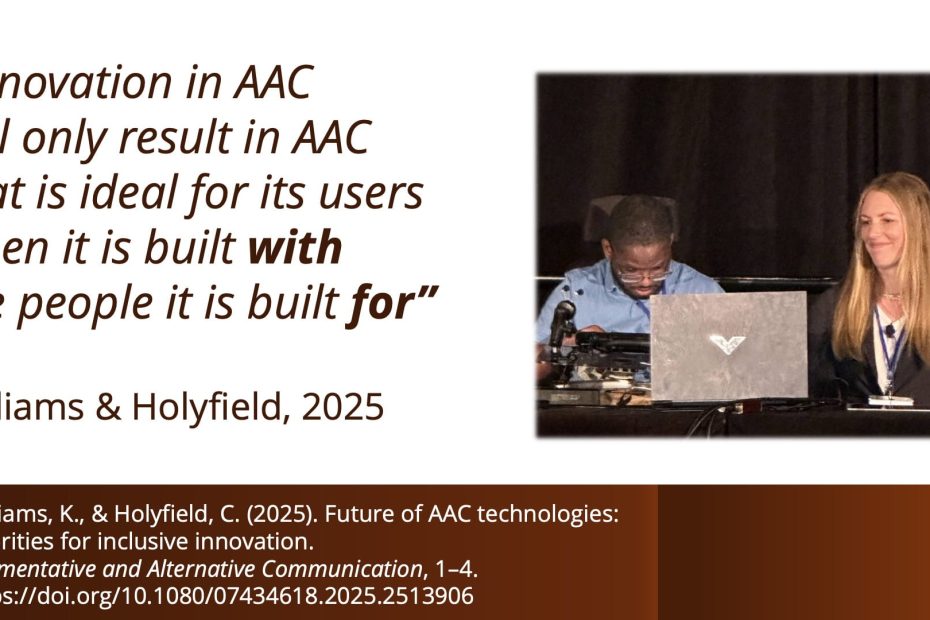
Kevin Williams and Christine Holyfield (2025) describe the importance of AAC innovations that incorporate “intuitiveness, feasibility, sustainability, solutions for those who currently benefit the least from existing technologies, affordability, and parallel advocacy work for expanded AAC funding”
Now free at the AAC journal
https://doi.org/10.1080/07434618.2025.2513906
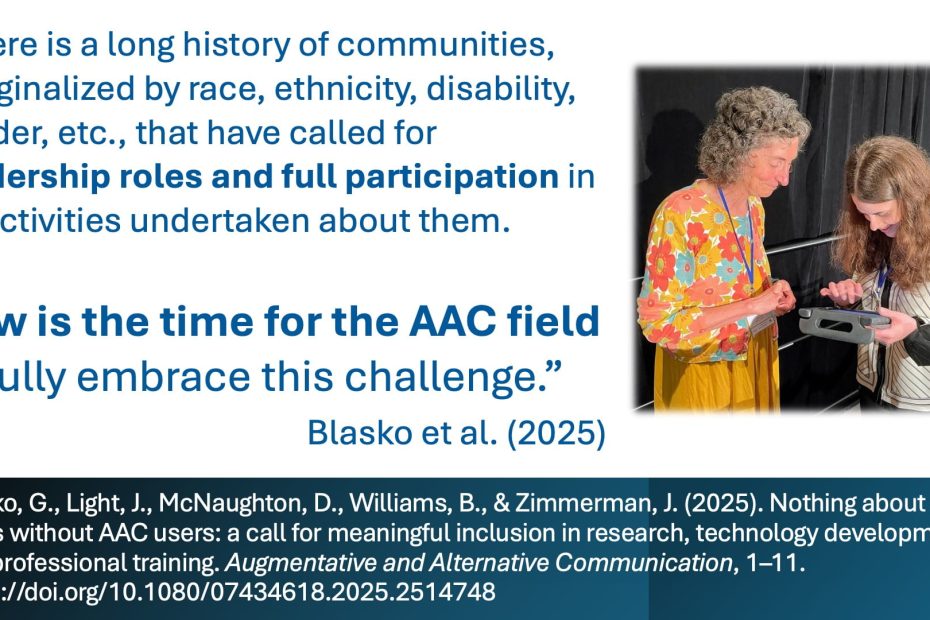
A call for meaningful inclusion for AAC users, by Grant Blasko, Janice Light, David McNaughton, Bob Williams, and Jordyn Zimmerman, now published.
Free access in AAC journal at
https://doi.org/10.1080/07434618.2025.2514748